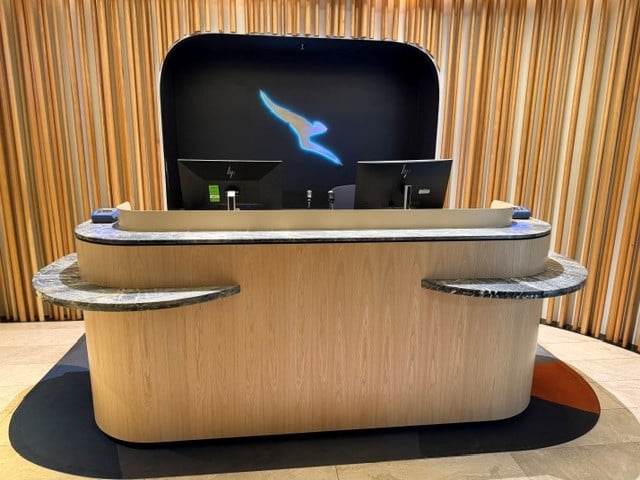
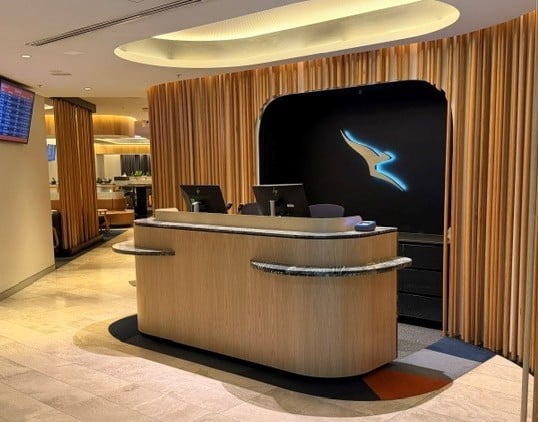
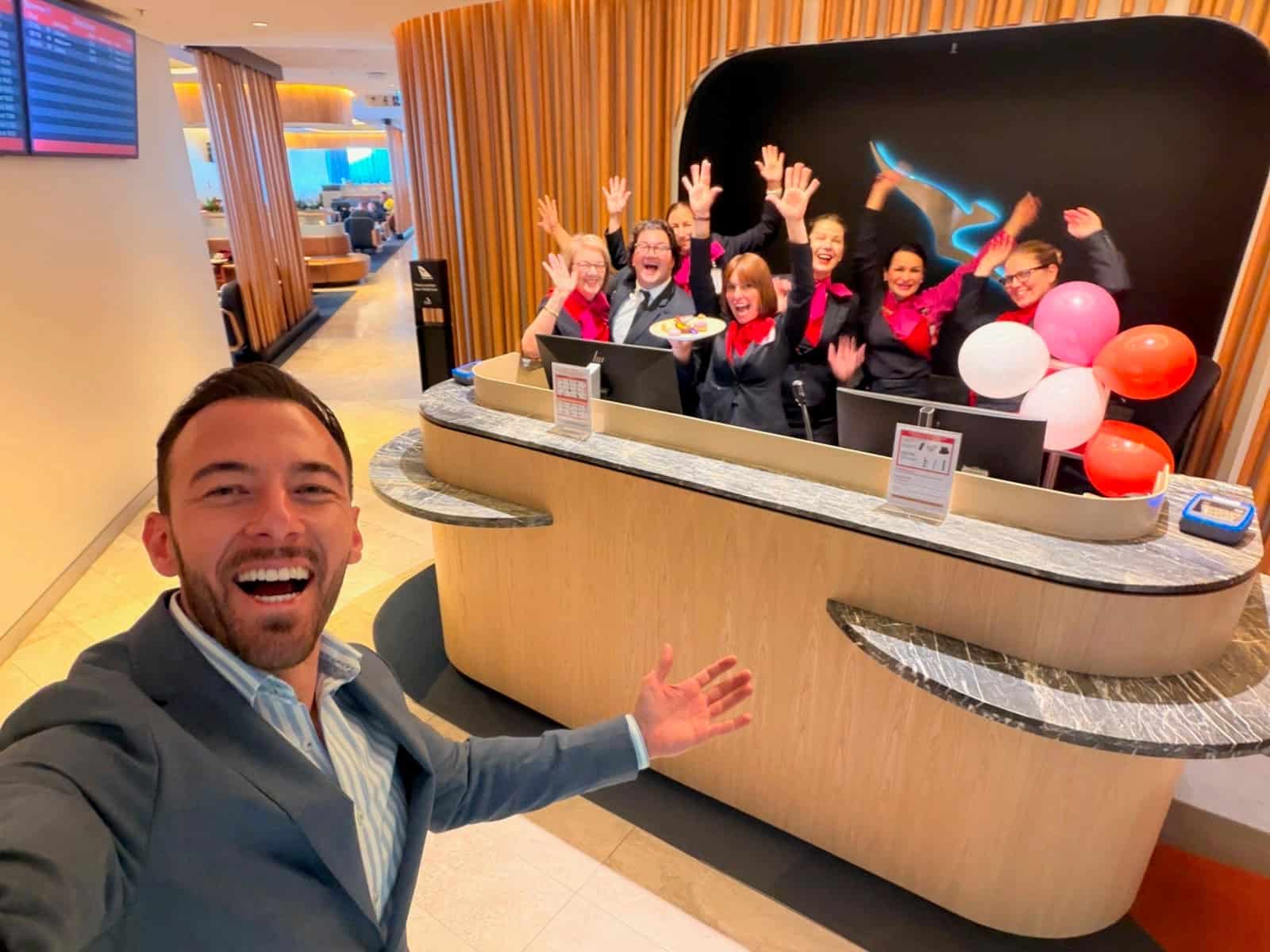
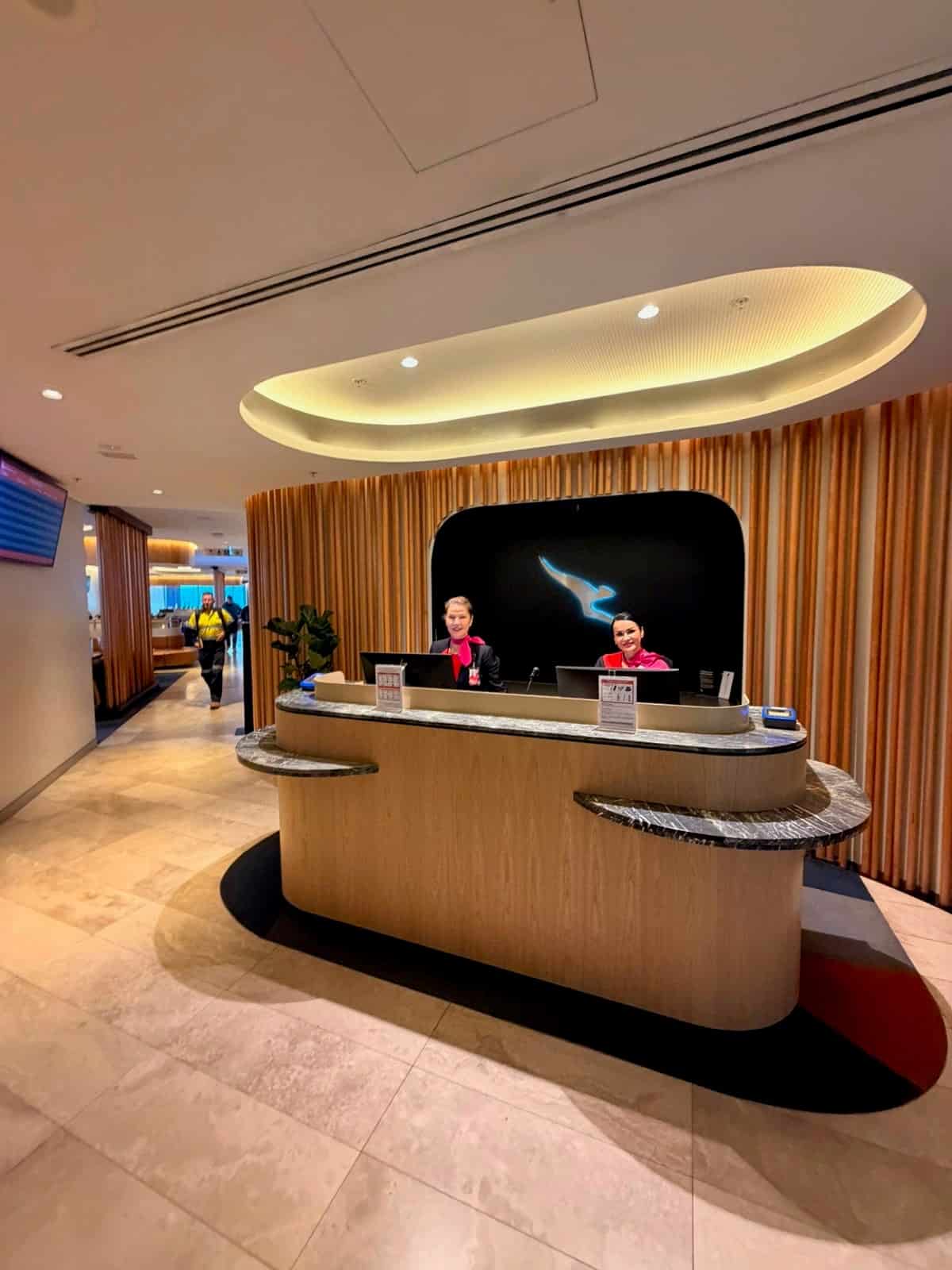
Every shift was programmed as night work outside lounge trading hours. That set the shape of the job. The daily scope was limited to what could be started and made good inside a single window, because each shift had to end with the space clean, safe and fully operational before the lounge reopened the next morning.
The lounge did not lose a single trading hour to construction activity. Qantas operations, guest experience and opening times were unaffected throughout.
Long-lead items were identified and ordered immediately at award. That took supply risk off the critical path and protected a programme with no float in it.
Pod components were pre-fabricated and pre-finished off-site. Doing the fabrication away from the terminal cut trade hours, noise, dust and waste on site and held quality control in a workshop environment rather than on a live floor. The result was a consistent standard of finish across every pod.
All personnel were inducted, screened and cleared for secure-zone access. Site access, tool movement and material movement were controlled, with daily sign-in and sign-out accountability. No security breaches or access incidents were recorded.
A live terminal has more parties in it than a standard site. Swan Group maintained engagement with BGIS, Qantas lounge management, airport operations, base building services and adjacent tenants, with clear communication lines and agreed escalation paths.
Issues were identified and resolved early, before they could affect cost, programme or the guest environment. Quality was verified progressively through the works against a single benchmark, rather than left to a handover inspection.
Swan Group delivers commercial fitout work for operators across Perth. This project shows that capability applied in one of the state’s most constrained environments, where the client’s requirement was that guests were never impacted by the building works.
This site is protected by reCAPTCHA and the Google Privacy Policy and Terms of Service apply.